
Banana Plantation (BCS)
For other uses of Banana Plantation, see Banana Plantation (disambiguation).
Banana Plantation

|
| Can't Attack. When an opponent draws a card: Gain 1 Gold |
| It's bananas, B-A-N-A-N-A-S! |
| Class |  Support Support
| |
|---|---|---|
| Card Pack |  Classic Classic
| |
| Rarity | Rare | |
| Keywords | — | |
| Introduced | Launch | |
| Stats | |||
|---|---|---|---|
| Cost |  2 2
|
Ammo | — |
| Charges | 1 | ATK | — |
| Type | Banana Farm | Reload | — |
Banana Plantation is Support Monkey card in Bloons Card Storm. It does not attack, instead granting the player 1 Gold each time the opponent draws a card. Picking a card does count as drawing, but creating cards (e.g. Arcane Master's On Reload, The Eternal's On Destroyed) or returning cards (e.g. Return to Sender, Salvation, Long Range Rang) does not.
The card artwork depicts a monkey in a Banana Plantation.
Tips
edit
|
This article or section is outdated and needs to be updated to reflect recent updates or newly available information. You can help out by editing this article. The editor who added this notice elaborates: v6.4 buff makes plantation more viable as a cheaper Farm, but when? |
This section was last updated for: version 6.1
- Banana Plantation at first glance is a cheaper Banana Farm that makes less Gold, however it has several distinctions: Player 1 can place a Plantation on their second turn (first turn if playing on High Finance), the income gain can occur during the opponent's turn, and it takes advantage of opponents who rely on card draws (e.g. Supply Drop, Archer's Instinct, Black Bloon).
- On the contrary, if the opponent has a full hand, the Plantation will not generate any Gold until the opponent plays cards.
- In comparison to Banana Farm, Banana Plantation takes three turns to pay itself off and will be one Gold ahead on on the fourth turn, while Banana Farm takes two turns to pay itself off and will be two gold ahead on the third turn, making Plantation much less efficient.
- Due to the opponent having control of your gold gain (other than natural card draw), this card is difficult to use effectively and often is an active detriment in decks. Use Banana Farm as a moneymaker instead, as the 1 extra gold is worth the consistent, much stronger moneymaking power.
- Keep in mind that the opponent can see your plantation, eco and current money. Your opponent can strategically draw enough cards with card draw to get what they need while preventing you from affording important cards like Super Monkey Storm or Bloon Master Alchemist.
- Unlike Banana Farm or Marketplace, Banana Plantation on 10 eco cannot afford many important interactions for tempo decks. Two 6 cost cards are not possible unlike farm, and two 7 cost cards are not possible unlike Marketplace. On 10 eco, two 5 cost cards would be affordable anyway, so the 1 extra gold gained from Plantation often doesn’t make much of a difference.
- Because a returning Long Range Rang (via not popping Bloons) doesn't trigger Plantation, Plantation is not competitive against normal Farm under that circumstance.
Update history
edit The word "card" is no longer capitalized in the card description
“
Banana Plantation has its cost reduced from 3 to 2. A thing with this patch is that we could not do reworks as much as we wanted to, so Banana Plantation instead of getting a major rework has had just its cost decreased to make it a little bit better in earlier aggro decks. In testing, it still felt kind of weak but it didn't feel awful anymore, and Banana Plantation could potentially see use versus aggro decks that want a lot of card draw and giving you a lot of money.
— u/No-Appearance1780's commentary, 32:16-32:48 (with most disfluencies removed)
— u/No-Appearance1780's commentary, 32:16-32:48 (with most disfluencies removed)
”
 Gold cost decreased ― 3 → 2
Development
editPlantation was proposed to do a total rework for Version 6.4, given that the card draw of opponents is hard to take advantage of, but instead it costs less Gold to rival the Banana Farm, especially in earlier aggro decks.[1] From community testing, the new Plantation still felt weak but was not unusable.[1]
Gallery
edit-
 Icon
Icon -
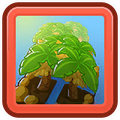 Placeholder icon
 -
 Placeholder art
 -
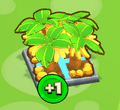 Screenshot
 -
 Screenshot of a Banana Plantation generating gold
 -
 Model render


In other languages
editThis section was last updated for: version 3.2
| Language | Text | Notes |
|---|---|---|
| Danish | Bananplantage | — |
| German | Bananenplantage | — |
| Spanish (Latin America) | Plantación | — |
| French | Plantation de bananes | — |
| Italian | Piantagione di banane | — |
| Japanese | バナナ大農園 | — |
| Korean | 바나나 대농장 | — |
| Norwegian | Bananplantasje | — |
| Polish | Plantacja bananów | — |
| Portuguese (Brazil) | Plantação de Bananas | — |
| Russian | Банановая плантация | — |
| Swedish | Bananplantage | — |
| Chinese (traditional) | 香蕉種植園 | — |
| Language | Text | Notes |
|---|---|---|
| Danish | Det er bananer, B-A-N-A-N-E-R! | — |
| German | Es heißt Bananen, B-A-N-A-N-E-N! | — |
| Spanish (Latin America) | ¡Son bananas, B-A-N-A-N-A-S! | — |
| French | Rien de mieux pour donner la banane ! | — |
| Italian | Banane ovunque! | — |
| Japanese | バナナだよ、バ・ナ・ナ! | — |
| Korean | 바나나 천지입니다! | — |
| Norwegian | Det er helt bananas – B-A-N-A-N-A-S! | — |
| Polish | Bananowe szaleństwo! | — |
| Portuguese (Brazil) | Mas que banana! B-A-N-A-N-A! | — |
| Russian | Бананы, БА-НА-НЫ! | — |
| Swedish | Det är bananer, B-A-N-A-N-E-R! | — |
| Chinese (traditional) | 是香蕉,香——蕉——! | — |
Navigation
edit


- ↑ 1.0 1.1 OdysseyTOS. "6.4 Tester Commentary - Bloons Card Storm". YouTube.